Block Walls Near Me: Complete Guide to Finding Durable and Aesthetic Retaining Walls
When homeowners or property developers search for block walls near me, they often want a reliable solution that combines durability, functionality, and curb appeal. Block walls have become one of the most popular options for landscaping, property boundaries, and retaining structures. This guide explores in-depth what block walls are, their benefits, the technology involved, real-world examples, and practical use cases that show why they are a long-lasting investment.
Understanding Block Walls
Block walls are structures built using concrete blocks, stone blocks, or modular units specifically engineered for strength and visual appeal. They can serve as retaining walls, privacy barriers, or purely decorative elements in landscaping. Unlike traditional poured concrete, block walls provide modularity, allowing flexibility in design, height, and texture.
Their construction is based on interlocking systems or reinforced masonry, making them resistant to soil pressure, erosion, and harsh weather conditions. These walls are particularly favored in both residential and commercial landscaping projects.
Types of Block Walls
Concrete Block Walls
Concrete block walls are the most common type, made from precast concrete blocks that are uniform in size and strength. They are durable, cost-effective, and suitable for structural applications such as retaining walls and perimeter fences.
Stone Veneer Block Walls
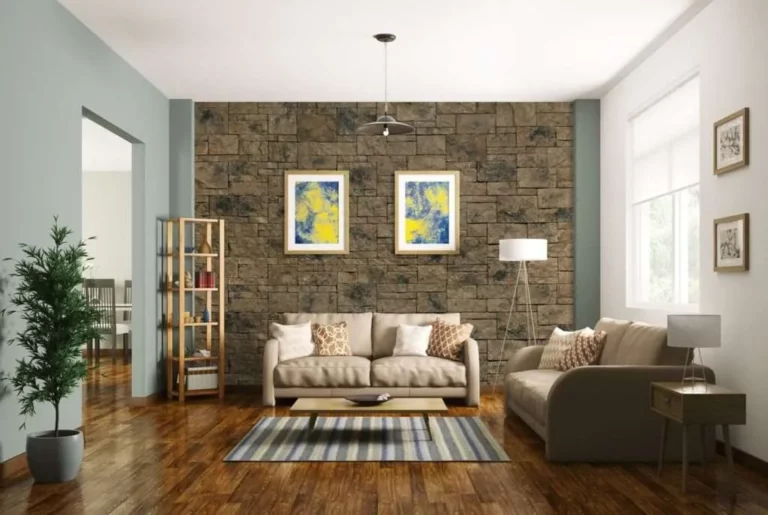
Stone veneer adds a natural look to block walls, blending functionality with aesthetics. These walls use a structural block base covered with thin slices of stone for a premium finish.
Interlocking Block Walls
Interlocking block systems simplify installation. The blocks are designed to fit together seamlessly, requiring minimal mortar while offering excellent stability. These walls are popular in DIY landscaping projects as well as professional builds.
Residential Retaining Wall with Concrete Blocks
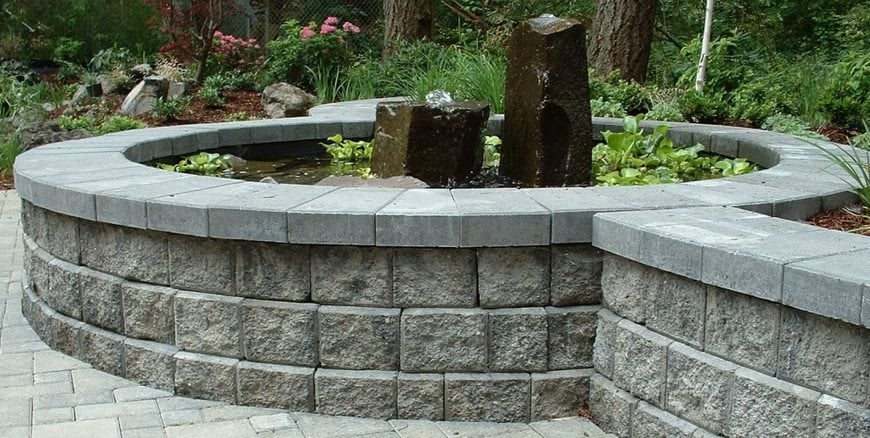
In suburban neighborhoods, homeowners often need retaining walls to manage sloped yards. Concrete block retaining walls are widely used for this purpose. For instance, a two-tier retaining wall built with interlocking concrete blocks can hold back soil while creating flat usable spaces for gardening or patios.
The advantage lies in their durability; concrete blocks withstand moisture and heavy loads while requiring minimal maintenance. Additionally, homeowners can choose textured or colored blocks to match the home’s exterior design.
Decorative Garden Border Using Stone Veneer Blocks
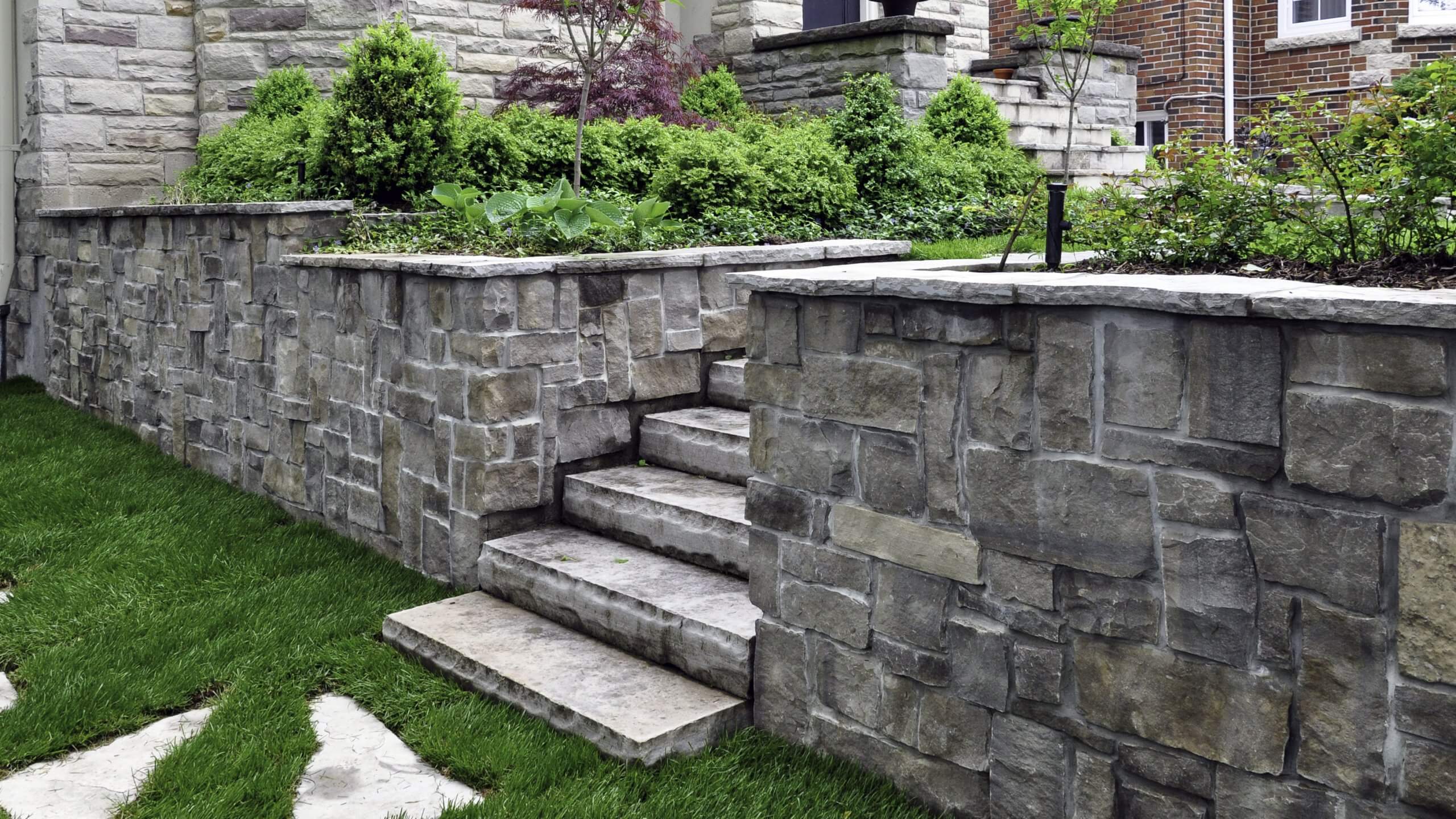
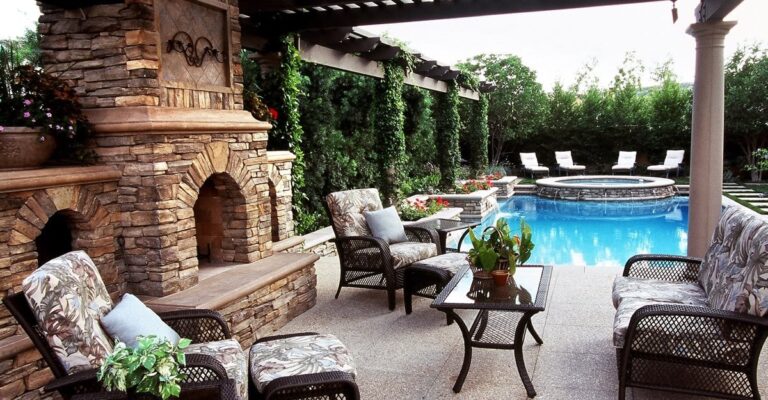
A real-world use case involves a luxury residential property where the landscape design incorporated stone veneer block walls. Instead of relying solely on plants for garden borders, the homeowner added stone veneer block walls to highlight pathways and flowerbeds.
The result was not only visually striking but also functional. The walls helped prevent soil erosion during rainfall while giving the garden a refined, timeless appearance. This approach blends durability with natural beauty, ideal for high-end landscaping projects.
Commercial Property with Interlocking Block Wall System
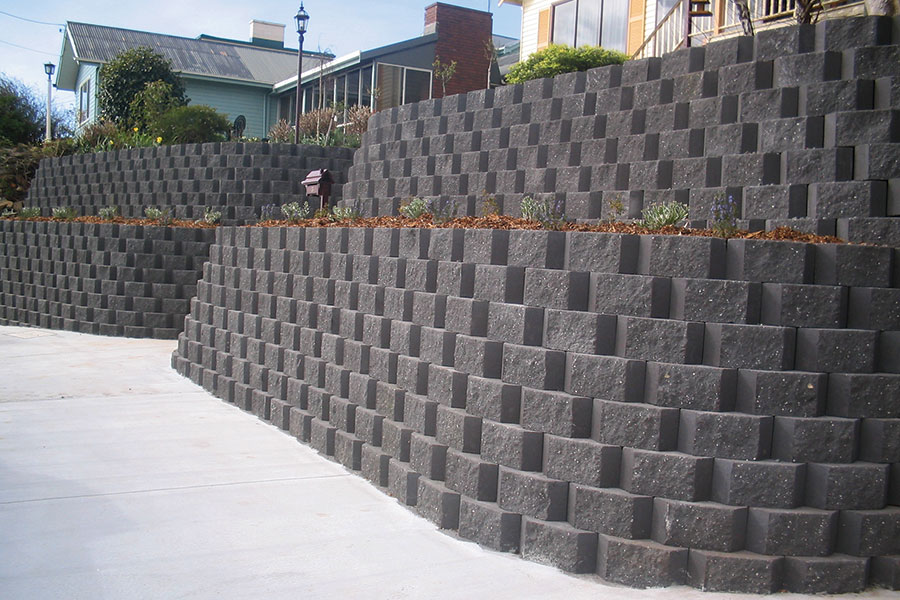
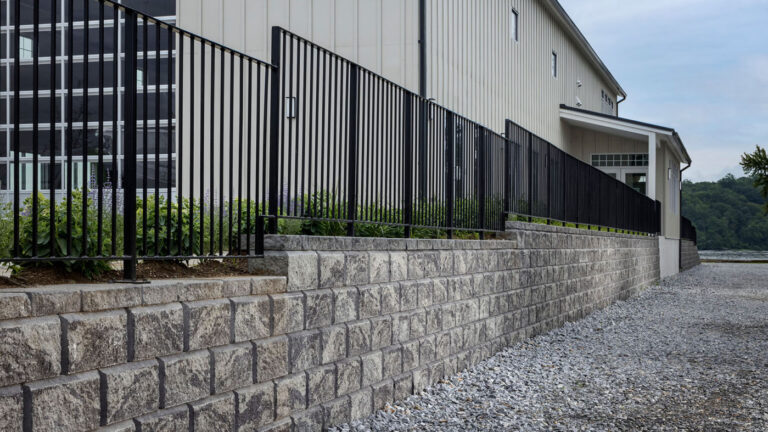
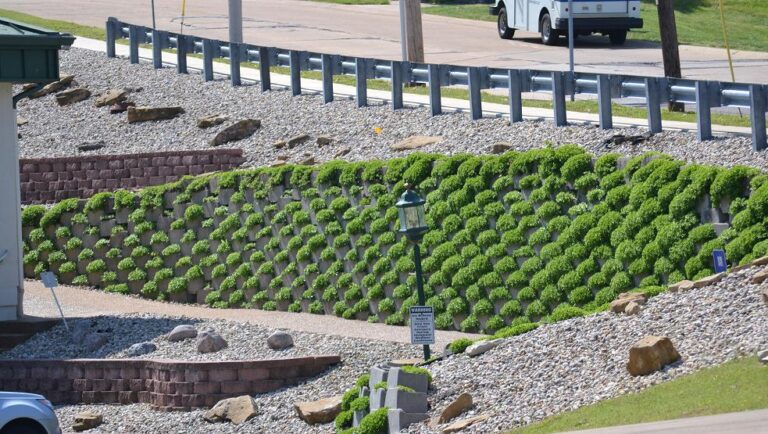
Commercial spaces such as shopping centers often use interlocking block walls for both retaining and decorative purposes. One example is a parking lot development where interlocking block walls were installed to stabilize sloped terrain.
This system was chosen because it allows quick installation without sacrificing strength. Engineers reinforced the wall with geogrid technology, ensuring that it could withstand soil pressure and heavy foot traffic. The modular design also allowed architects to create curved walls, adding aesthetic appeal to the otherwise functional structure.
Custom Block Wall for Privacy in Urban Homes
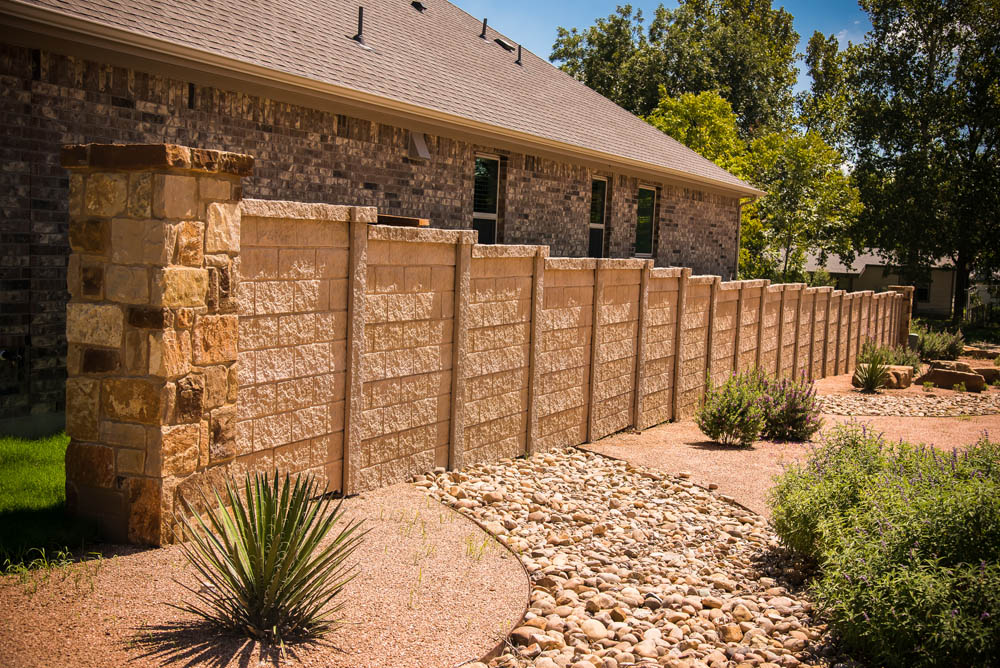
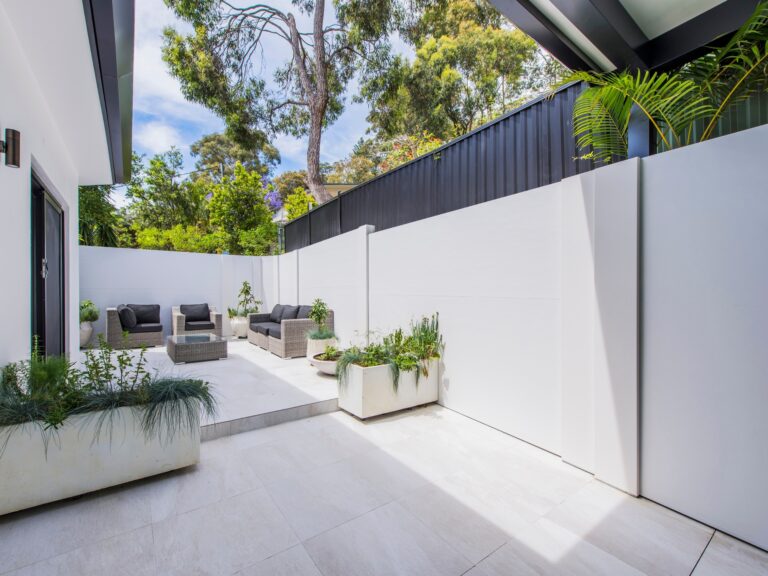
In densely populated urban areas, privacy is a top concern for homeowners. A custom-designed block wall was constructed around a modern residence, incorporating a mix of concrete blocks and decorative cut-outs.
This project showcased how block walls could go beyond retaining soil or marking boundaries. The wall added privacy, reduced noise pollution, and elevated the modern architectural style of the house. Such custom block walls highlight the adaptability of block systems to different design needs.
Benefits of Block Walls Near Me
Choosing block walls near me brings a wide range of benefits beyond simple structure. Many homeowners and property developers prefer local contractors because they ensure reliable installation and lasting quality.
Durability: These block walls are built to withstand tough weather conditions, soil pressure, and daily wear, ensuring long-term strength.
Low Maintenance: Unlike wooden fences, block walls require little upkeep. Occasional cleaning and small repairs are usually enough, making them cost-effective for long-term use.
Aesthetic Versatility: With options such as concrete, stone veneer, or decorative finishes, a local block wall installation can easily complement any architectural style and match community design trends.
Increased Property Value: A well-constructed block wall enhances curb appeal and delivers structural benefits that boost overall property value.
Noise and Privacy Control: Especially in busy or urban neighborhoods, nearby block wall services provide effective barriers against external noise and create strong privacy for homes or businesses.
The Role of Technology in Block Wall Construction
Modern construction technology has made block walls stronger, safer, and more design-friendly.
-
Geogrid Reinforcement: This technology integrates synthetic grids into the soil behind block walls, distributing pressure evenly and preventing collapse.
-
Drainage Systems: Perforated pipes and gravel backfill systems are incorporated to reduce hydrostatic pressure behind walls.
-
Computer-Aided Design (CAD): Architects and engineers now use CAD to design block walls, ensuring precision in curves, heights, and structural calculations.
-
Sustainable Materials: Many modern block walls are constructed using eco-friendly concrete mixes, reducing the environmental impact of large-scale projects.
Real-Life Use Cases of Block Walls</h2>
Slope Stabilization
In hilly areas, block walls act as essential retaining structures that prevent landslides and soil erosion, making landscapes more usable and safer.
Landscaping EnhancementMasonryry walls create levels, raised garden beds, and distinct zones within outdoor living spaces, transforming simple yards into sophisticated landscapes.
Masonry walls are often used as boundary markers that double as security barriers. Their height and strength deter unauthorized access.
Outdoor Living Spaces
Masonry walls can define patios, fire pit zones, or outdoor kitchens, creating functional spaces for relaxation and entertainment.
Frequently Asked Questions
1. What is the average lifespan of a block wall?
A well-built block wall can last 50–100 years, depending on the materials used and environmental conditions. Proper drainage and reinforcement extend its lifespan significantly.
2. Are block walls better than poured concrete walls?
Yes, modular walls offer modularity, easier repairs, and aesthetic versatility. Poured concrete is strong but lacks the design flexibility of modular walls.
3. Do masonry walls require a foundation?
Yes, most masonry walls, especially retaining walls, require a solid foundation to ensure stability. The foundation depth depends on soil type, wall height, and load requirements.